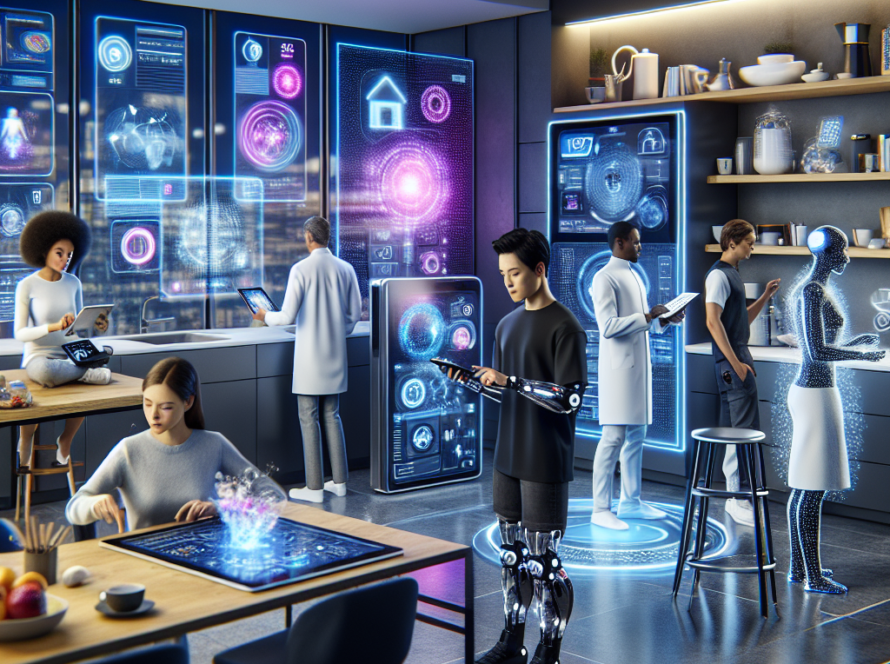
Key Takeaways
- AI is revolutionizing smart home electronics by improving security, energy efficiency, and user interaction.
- Integration of AI with IoT devices enables seamless automation and predictive home management.
- Case studies highlight successful AI adoption in next-gen smart homes, showcasing tangible benefits to consumers.
- Future trends point to enhanced personalization, robust data privacy measures, and edge computing advancements for smarter homes.
Introduction
As we approach 2026, artificial intelligence (AI) is becoming a cornerstone in the evolution of smart home technologies. The fusion of AI with consumer electronics is enabling unprecedented levels of automation, security, and personalized living experiences. Smart homes are no longer passive environments but dynamic ecosystems that learn user preferences, optimize resource consumption, and enhance safety. This article explores how AI is transforming smart homes in 2026 by analyzing current trends, technological advancements, and real-world applications.
From intelligent voice assistants to AI-driven security systems, the impact of AI is reshaping how homeowners interact with their living spaces. Furthermore, the integration of AI with Internet of Things (IoT) devices facilitates seamless communication and control, resulting in energy-efficient and responsive environments. This comprehensive overview also examines challenges and future opportunities in this rapidly evolving field, ensuring readers stay informed on the cutting-edge developments that define the smart home landscape.
AI-Driven Enhancements in Smart Home Security
Advanced Threat Detection and Prevention
One of the most prominent applications of AI in smart homes is in security systems. AI algorithms analyze data from cameras, sensors, and other connected devices to detect anomalies and potential threats in real-time. Facial recognition, motion pattern analysis, and behavioral prediction enable systems to differentiate between usual household activities and suspicious events, reducing false alarms and improving response times.
Integration with Voice and Biometrics
Modern smart homes incorporate AI-powered voice assistants and biometric authentication to control security access. This integration allows for secure, hands-free management of doors, alarms, and monitoring systems. AI continually learns recognized users’ voices and biometrics to adapt access protocols and alert homeowners about unauthorized attempts.
Intelligent Energy Management and Efficiency
AI-Powered Automation for Reduced Consumption
AI optimizes energy usage by learning household behavior patterns and automatically adjusting lighting, heating, and cooling systems. Smart thermostats equipped with AI predict occupancy and weather changes to minimize energy waste without sacrificing comfort. These advancements contribute significantly to lower utility costs and reduced environmental footprints.
Predictive Maintenance of Appliances
AI-enabled diagnostics monitor appliance performance, detecting irregularities early to prevent failures. Predictive maintenance alerts homeowners before issues arise, extending device lifespan and improving overall home efficiency.
Seamless AI and IoT Integration for Smart Automation
Unified Ecosystems for User Convenience
The confluence of AI and IoT drives seamless interoperability among diverse smart devices. This interconnected network allows users to manage lighting, entertainment, climate control, and security from unified interfaces. Platforms employing AI can automatically coordinate device behavior — for example, turning off lights and lowering blinds when no one is home.
Context-Aware Personalization
AI uses data from IoT devices to create personalized environments that adapt dynamically to occupants’ preferences. This context-awareness improves lifestyle comfort by tailoring settings based on time of day, activity type, or even mood recognition through sensor inputs.
Case Studies: AI Adoption in Next-Generation Smart Homes
Leading smart home manufacturers have incorporated AI in innovative ways to enhance user experience. One example involves AI-driven security systems that reduced burglary incidents by 30% due to improved threat prediction. Another case showed energy savings of up to 25% in homes using AI-based climate control compared to traditional setups.
These real-world applications demonstrate how AI’s analytical capabilities empower smarter, safer, and more efficient homes.
For a broader understanding of AI’s impact on consumer electronics, explore the article on AI in Consumer Electronics: Enhancing User Experience, which offers insights into user-centered AI innovations.
Future Trends and Challenges in AI-Driven Smart Homes
Edge Computing and Privacy Protection
The shift toward edge computing allows data processing to occur locally on devices, reducing latency and enhancing privacy — a critical concern in smart home environments. AI architectures increasingly focus on decentralized models to protect user data while maintaining performance.
Enhanced Personalization and Emotional AI
Future smart homes are expected to implement emotional AI that recognizes and reacts to user emotions for a more empathetic interaction. This technology will elevate user satisfaction by creating environments that respond not only to physical needs but also to psychological states.
Interoperability Standards and Regulatory Compliance
Establishing universal standards for AI and IoT device communication remains a key focus to facilitate broader adoption. Additionally, regulatory guidelines will evolve to address ethical AI deployment and data security within smart homes.
For an outlook on innovations shaping AI and electronics, consult the detailed coverage in Which Innovations Are Reshaping Consumer Tech In 2026? to stay ahead of emerging trends.
Conclusion
Artificial intelligence is undeniably transforming smart homes into intelligent, adaptive spaces that prioritize security, energy efficiency, and personalized comfort. The fusion of AI with IoT devices paves the way for seamless automation and predictive management, offering homeowners unprecedented control and peace of mind. While challenges related to privacy, data security, and interoperability require ongoing attention, technological advancements continue to push the boundaries of what smart homes can achieve.
As we advance towards a fully AI-integrated domestic environment, understanding these trends will be essential for homeowners, manufacturers, and developers aiming to leverage the full potential of smart home technologies.
Frequently Asked Questions
How does AI improve smart home security compared to traditional systems?
AI enhances security by enabling real-time threat detection through advanced algorithms that analyze behavioral patterns and sensor data, reducing false alarms and improving response accuracy beyond conventional systems.
What role does integration between AI and IoT play in smart homes?
The synergy of AI and IoT enables devices to communicate and coordinate actions autonomously, creating seamless automation and personalized environments based on user habits and contextual awareness.
Are there privacy concerns with AI-powered smart home devices?
Yes, privacy is a significant concern. However, advancements like edge computing and enhanced encryption aim to process data locally and secure information to protect user privacy within smart homes.
What future AI trends should smart homeowners watch for?
Homeowners should monitor developments in emotional AI for personalized experiences, edge computing for privacy, and interoperability standards to ensure devices work cohesively.
Can AI-driven energy management systems really reduce utility bills?
Absolutely. By analyzing usage patterns and optimizing device operations, AI systems minimize energy waste, which directly results in lower utility costs for homeowners.